
Services
Asbestos Removal Contractors in Glasgow
Asbestos Removal Environmental carries out non-licensed and notifiable non-licensed (NNLW) asbestos removal — the categories covering the majority of asbestos found in homes and commercial buildings, from cement garage roofs to Artex and floor tiles. Every job runs under controlled conditions: protected work areas, wet suppression, Class H vacuums, full decontamination and certified disposal. If your material is licensable, we tell you straight and help you arrange the right contractor.
Last reviewed
Know Where You Stand
Licensed, Notifiable (NNLW) & Non-Licensed Work — Explained
Almost no contractor explains this clearly. We do — because knowing which category your material falls into is the difference between a safe, legal job and a serious risk.
Licensed work
Sprayed coatings, pipe and boiler lagging, and most asbestos insulating board (AIB). Legally requires an HSE licensed contractor, 14-day notification and medical surveillance.
Notifiable non-licensed work (NNLW)
Lower-risk work that still requires notification to the enforcing authority, record-keeping and health surveillance.
Non-licensed work
For example asbestos cement in good condition — still demanding trained operatives, controlled methods and correct disposal.
Scope
Materials We Remove
- Asbestos cement sheets & garage roofs
- Cement roof sheets, slates & cladding
- Asbestos sheds & outbuildings
- Cement soffits & fascias
- Textured coatings (Artex)
- Vinyl floor tiles & adhesives
- Asbestos cement flues, gutters & downpipes
- Cold water tanks
- Rope seals & gaskets
- Bitumen products
We deliberately don’t remove licensable materials — thermal lagging, sprayed coatings and most asbestos insulating board. Where a survey identifies licensable materials (sprayed coatings, pipe or boiler lagging, most asbestos insulating board), we tell you straight and help you arrange an HSE licensed contractor.
The single most common job we’re called out to in Glasgow has its own page: asbestos garage roof removal, with typical prices, the method and what to do if a sheet has already cracked.
For a closer look at a particular material, see our pages on Artex asbestos removal, asbestos floor tile removal and asbestos water tank removal. Roofs and outbuildings have their own pages too: asbestos roof removal, asbestos shed removal and asbestos soffit removal.
Looking for the overview of everything we do in the city rather than the method? Start with asbestos removal in Glasgow; for what is on the other side of the licensing line, read our guide to asbestos pipe lagging and insulation board.
Across The City
Asbestos removal across Glasgow
One city, four or five completely different sets of building stock. What we find — and what a job costs — depends more on which part of Glasgow you're in than most people expect.
In the West End — Hillhead, Partick, Hyndland, Dowanhill — the sandstone went up long before asbestos reached a building site, so the material always arrives with later work. Textured coatings on ceilings from a 70s refit, thermoplastic tiles under the kitchen lino, cement flues out the back of a decommissioned boiler, and cement sheeting on the back-court bin stores and wash houses. The work is rarely complicated; the access is, because everything has to come down a shared close and out past a resident’s parking bay.
The Southside splits in two. Shawlands, Battlefield and Strathbungo repeat the tenement pattern, while Newlands, Cathcart, Muirend and out towards Giffnock are interwar and post-war semis and bungalows with the thing we get called about most: a detached asbestos cement garage on a driveway, often with matching side panels and a coal store to match.
The East End — Dennistoun, Bridgeton, Parkhead, Shettleston, Baillieston — mixes surviving tenements with post-war redevelopment and a great deal of small light-industrial property. Rear-lane lock-ups are the local speciality, and they are the fiddliest garage roofs in the city to get a vehicle near.
The post-war schemes are the most predictable work of all. Drumchapel, Castlemilk, Easterhouse, Pollok, Knightswood, Cardonald, Springburn, Possilpark and Maryhill were built through the 1950s and 60s, when asbestos cement was simply what you used for anything that lived outdoors. That means outhouse and drying-area roofs, coal bunkers, bin shelters, whole garage courts, soffits under the eaves and flat cladding panels on gable ends — usually bonded material in fair condition, which is the straightforward end of what we do.
In the city centre and Merchant City, it is commercial property and conversions: offices, licensed premises, retail units and upper floors turned into flats. Here the duty to manage under CAR 2012 Regulation 4 bites, and the first question is usually not what to remove but whether an asbestos register exists at all.
Wherever the property sits inside the city boundary, the rate is the same — nobody pays a premium for a postcode. Tell us the postcode and the material and we will confirm coverage and the sensible next step before anybody arranges a visit. Outside the city, the surrounding towns each have their own page.
Beyond the city boundary
On Your Property
Anatomy of a Safe Removal
From plan of work to certified disposal, here's exactly what happens on your property — stage by stage.
A bare room with the suspect material marked, and a plan of work being drawn up.
Scene 1 of 5
It starts on paper.
Every removal begins with a plan of work and risk assessments — and, for notifiable work, notification to the enforcing authority. Nothing is touched until the method is set.
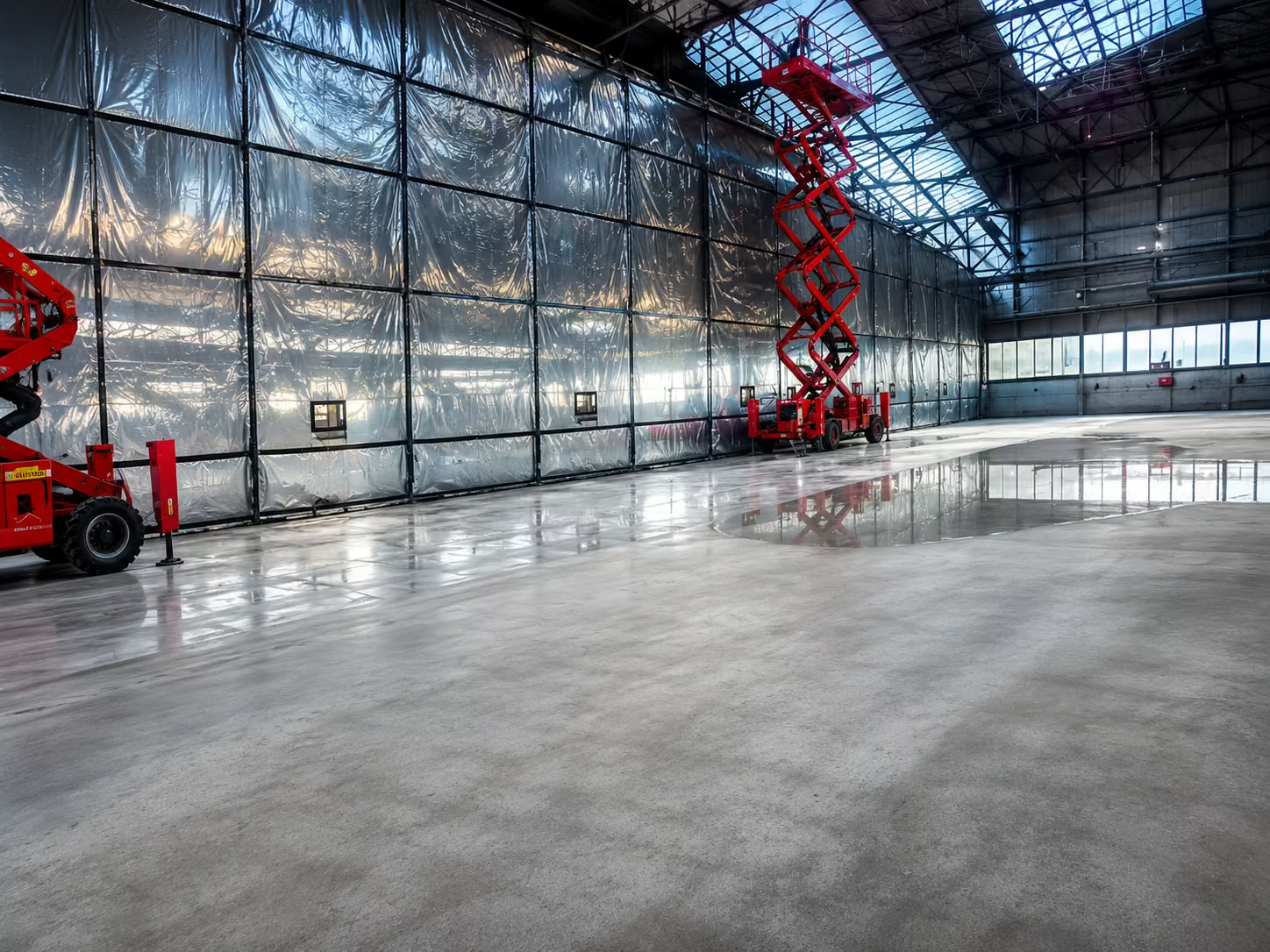
The work area sealed with polythene sheeting, barrier tape and warning signage, with a controlled access point.
Scene 2 of 5
Your property is protected.
We isolate the work area with polythene sheeting, seal what stays in place, and set up signed, controlled access before any material is touched.
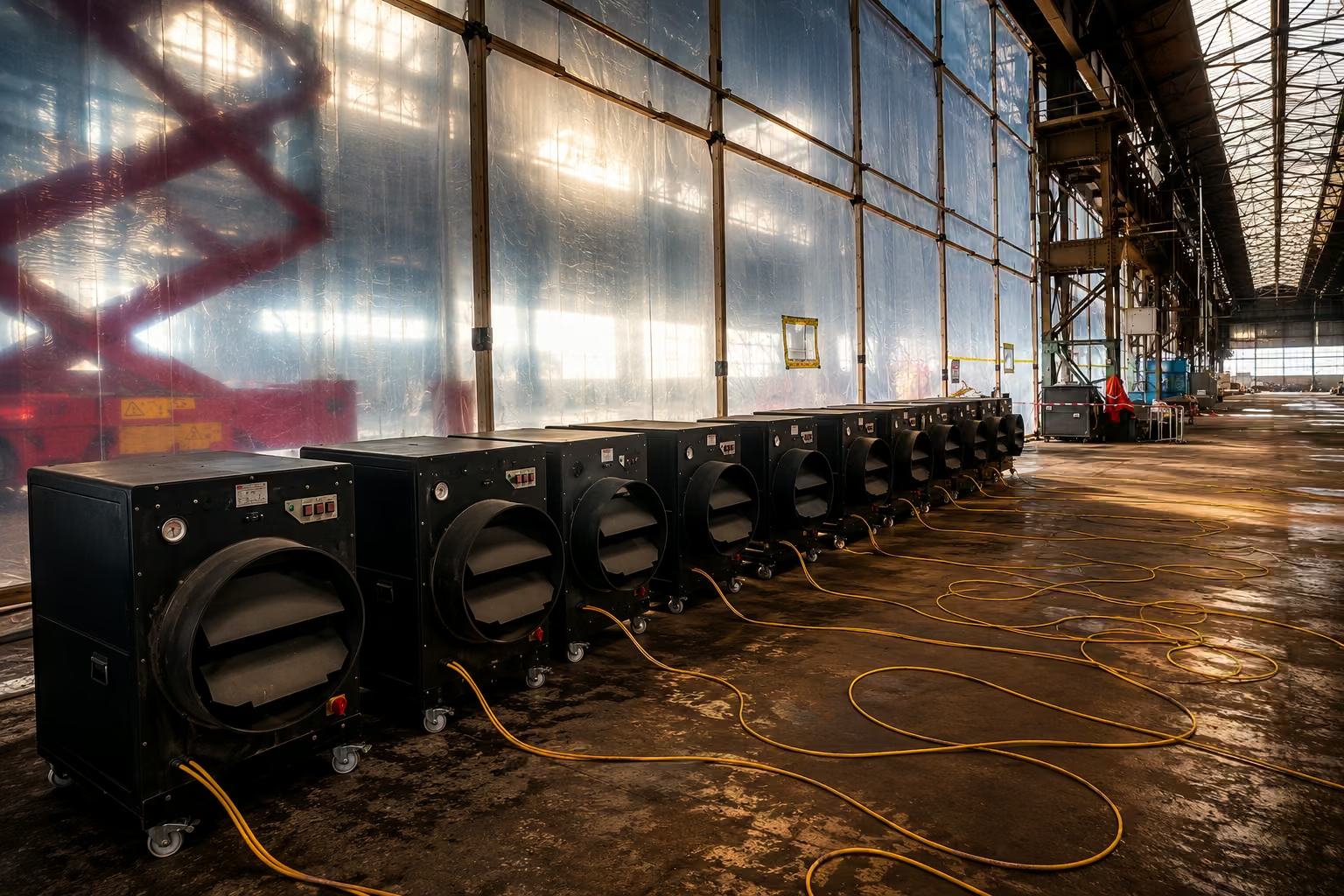
Water mist over the material and a Class H vacuum drawing air through filters, with the pressure gauge reading in the green.
Scene 3 of 5
Fibres are captured at source.
Wet suppression keeps fibres bound to the material; Class H filtered vacuums capture anything released. Air passes through filters — not through your home.
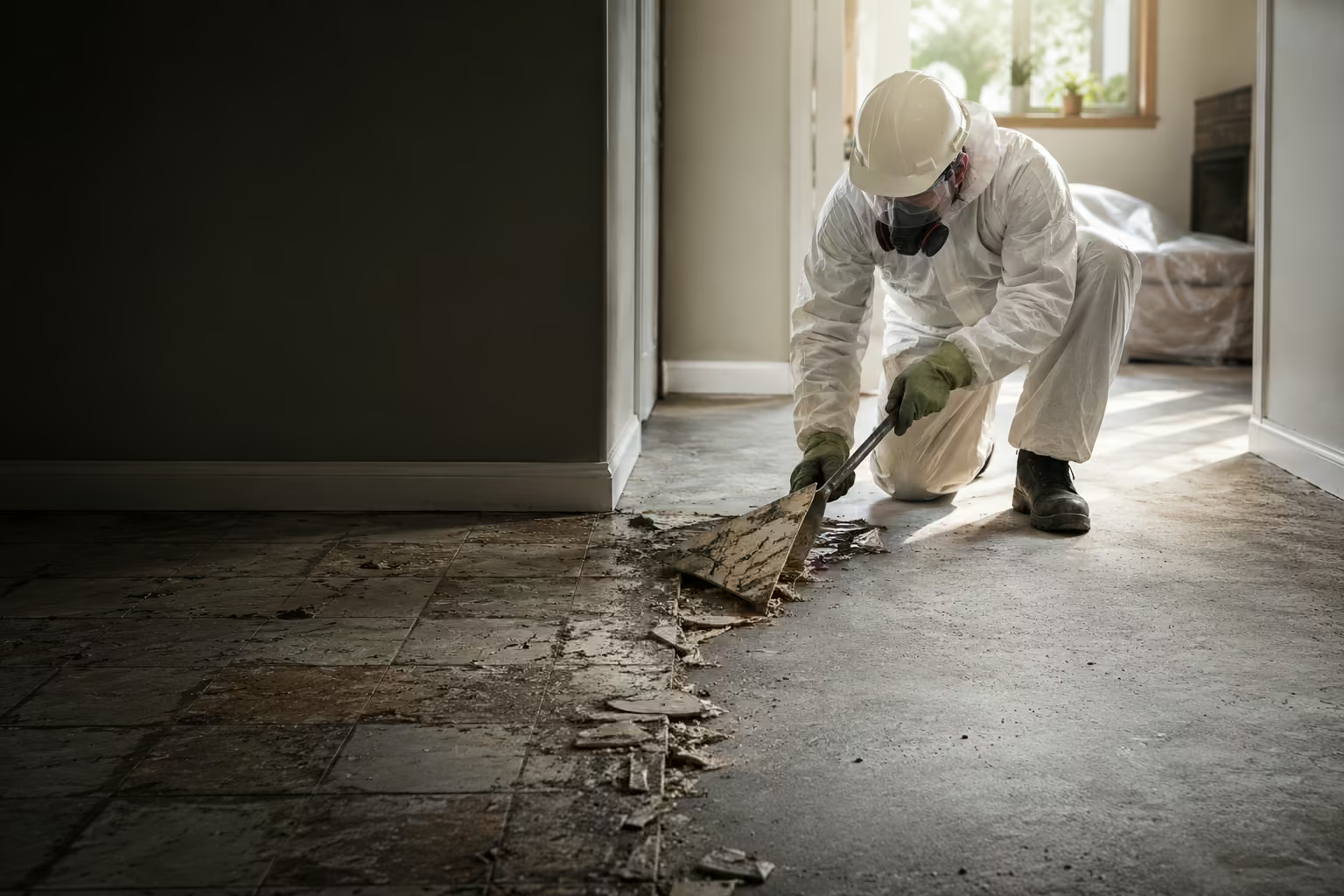
A suited operative removing the material and sealing it into a red-tagged waste sack, then passing through decontamination.
Scene 4 of 5
The work happens under control.
UKATA-trained operatives remove the material whole where possible, double-bag every piece in UK approved waste bags, and decontaminate fully before stepping outside the work area.
The clean room with sheeting removed, an inspection checklist completed and a waste consignment note stamped and sealed.
Scene 5 of 5
Checked and proven on paper.
The area is thoroughly inspected and handed back clean — with independent reassurance air testing available on request. Every bag of waste is tracked to a licensed facility, and the paperwork is yours to keep.
That’s what doing it properly looks like.
Proof, Not Promises
Site Gallery
Common Questions
Asbestos removal FAQs
Are you HSE licensed?
We carry out non-licensed and notifiable non-licensed asbestos work — the categories that cover the majority of asbestos in Scottish homes and businesses, including cement roofs, Artex, floor tiles and more. Licensable materials legally require an HSE licensed contractor; if a survey identifies these, we say so straight away and help you arrange compliant removal.
Do I have to move out during removal?
Usually not. We isolate the work area with sheeting and controlled access so the rest of your property stays usable. For larger jobs we'll agree timings and any temporary no-go areas with you in advance.
How long does removal take?
Many domestic jobs — a garage roof or an Artex ceiling — are completed in a day. Larger or phased works are scheduled around access and disposal, and we give you a clear timeline with your fixed quote.
Can you remove my garage roof?
Yes — corrugated asbestos cement garage and shed roofs are core non-licensed work for us, and the job we're called out to most across Glasgow. Sheets come off whole where possible, wrapped in 1000-gauge polythene and taken to a licensed waste facility with full documentation. A single garage roof typically runs £400–£800 including disposal and is usually finished in a day. Our garage roof removal page covers the method, the prices and what to do if a sheet has already broken.
Is asbestos abatement the same as asbestos removal?
Yes. Abatement is the term used in the United States and in some commercial specifications; in the UK the same work is called asbestos removal and is regulated by the Control of Asbestos Regulations 2012. The word changes nothing about the method, the category of work or the paperwork.