Sectors
Industrial Asbestos Removal Across Glasgow & Scotland
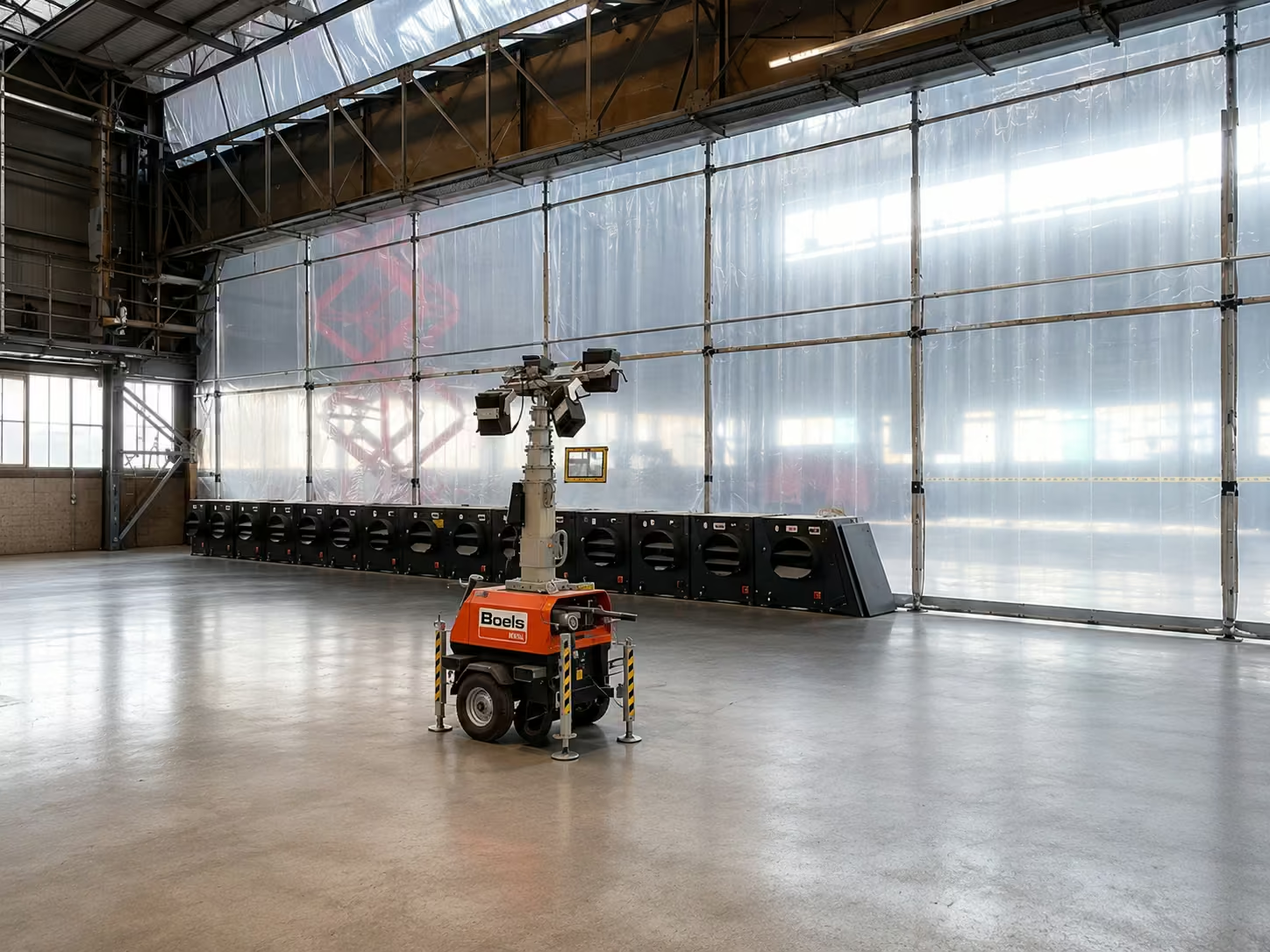
Industrial asbestos work demands scale and discipline: protected work zones, controlled access, air filtration and tight programme control. Our UKATA-trained teams deliver large-scale non-licensed and notifiable asbestos removal — cement roofs, cladding, gutters and flues — on factories, warehouses and demolition-phase projects Scotland-wide.
Last reviewed
On Site
What we find on industrial sites
Most Scottish industrial buildings put up or refitted before 2000 contain some asbestos. Which materials, and their condition, decide who is legally allowed to remove them.
| Material | Where it turns up | Usual work category | Our role |
|---|---|---|---|
| Cement roof sheets and cladding | Warehouses, factories, workshops, farm buildings | Non-licensed when intact; NNLW when weathered or broken | We remove it |
| Cement gutters, downpipes and flues | Building perimeters, boiler houses, plant rooms | Usually non-licensed | We remove it |
| Textured coatings and floor tiles | Offices and welfare blocks on site | Non-licensed or NNLW, depending on the task | We remove it |
| Insulating board (AIB) panels and ceiling tiles | Partitions, fire breaks, soffits, service ducts | Mostly licensed | We identify it and help you arrange an HSE licensed contractor |
| Pipe and boiler lagging, sprayed coatings | Plant rooms, steam and process pipework | Licensed | We identify it and help you arrange an HSE licensed contractor |
Where a survey identifies licensable materials (sprayed coatings, pipe or boiler lagging, most asbestos insulating board), we tell you straight and help you arrange an HSE licensed contractor.
Method
How an industrial job runs
It starts with the survey. Before any refurbishment or demolition, the Control of Asbestos Regulations 2012 and HSE’s survey guide (HSG264) expect a refurbishment and demolition survey of the parts of the building the work will touch. If you already hold one, we price from it; if not, we carry it out first, because a quote built on guesswork is the one that changes halfway through.
From the survey we write a plan of work for each phase: which areas close, for how long, how operatives and waste move through the site, and how the work fits around your production or your principal contractor’s programme. Notifiable non-licensed work is notified to the enforcing authority before it starts, and we keep the records and health surveillance the regulations require.
Roof and cladding work is done at height from scissor lifts, booms or scaffold. Sheets are damped, unbolted and lowered whole rather than broken, then double-wrapped and labelled. Every load leaves site as special waste with a SEPA consignment note, carried by us as a registered waste carrier to an authorised facility, and the paperwork comes back to you for your records.
When the area is clear, it is visually inspected before it reopens, with reassurance air testing by an independent analyst available where you want the extra evidence.
Scale & Discipline
Capabilities
- Asbestos cement roof & cladding strip at height
- Protected work zones with controlled access & air filtration
- Live-environment working alongside site operations
- Cement gutters, flues & downpipe removal
- Demolition-phase strip-outs (R&D survey led, non-licensed scope)
- Plant & machinery decontamination
Programme Control
Compliance & Programme Control
- NNLW notifications handled
- RAMS & plans of work per phase
- Daily records & air monitoring logs
- Visual inspections with reassurance air testing available
- Consignment-noted waste streams

Industries
Sectors Served
- Manufacturing
- Distribution & logistics
- Energy & utilities
- Marine & rail
- Demolition contractors (subcontract removal packages)
Common Questions
Industrial asbestos FAQs
Can production continue during removal?
Often yes. We build protected work zones with controlled access and air filtration so removal runs alongside your operations, phasing the works and agreeing exclusion areas so production keeps moving.
Which materials fall within non-licensed scope?
Non-licensed and notifiable non-licensed work covers materials such as asbestos cement roofs, cladding, gutters and flues, and textured coatings. Higher-risk licensable materials — sprayed coatings, thermal lagging and most insulating board — legally require an HSE licensed contractor, and we help you arrange that where a survey identifies them.
Do you work as a subcontractor to principal contractors?
Yes. We regularly deliver subcontract removal packages on demolition and refurbishment projects, coordinating under CDM 2015 with your principal contractor and fitting our programme to yours.
When is notification required?
Notifiable non-licensed work (NNLW) requires notification to the enforcing authority before work starts, along with record-keeping and health surveillance. We identify what's notifiable from the survey and handle the notifications for you.