
UKATA-Trained Specialists · Glasgow & All of Scotland
Safe, Compliant Asbestos Removal in Glasgow
A Glasgow asbestos removal company offering clear advice, asbestos surveys and controlled non-licensed and notifiable non-licensed work for homes, businesses and industrial sites across Glasgow and all of Scotland.
5.0from 9 Google reviewsFree, no-obligation enquiry · Available 24/7 · Glasgow-based team

- UKATA-TRAINED OPERATIVES
- SEPA REGISTERED CARRIER EAS/R/6101484
- COMBINED LIABILITY INSURED
- ASBESTOS-TRAINED PLUMBER & JOINER
- NON-LICENSED & NNLW SCOPE
- CONTROLLED WORK METHODS
- GLASGOW-BASED TEAM
- AVAILABLE 24/7
- 01
Stop and leave it alone
Do not drill, sand, scrape, sweep or break suspected material.
- 02
Photograph it safely
Only from a safe distance — then attach it to our quote form. A photo cannot confirm asbestos, but it helps us guide you.
- 03
Speak to our Glasgow team
Tell us what has happened and we’ll explain the safest next step.
Glasgow's Asbestos Safety Specialists
Honest, compliant asbestos work — done properly
Asbestos Removal Environmental is a Glasgow-based asbestos contractor specialising in non-licensed and notifiable non-licensed asbestos work — the categories covering the majority of asbestos found in Scottish homes and commercial buildings. We survey, remove, dispose of and manage asbestos-containing materials in full compliance with the Control of Asbestos Regulations 2012. Where a material legally requires an HSE licensed contractor, we tell you straight and help you arrange it.
Every job is handled by one Glasgow team — UKATA-trained operatives supported by a certified plumber and joiner, both asbestos trained — led by founder Quinton Davidson and his 30+ years in the industry. That depth is why clients also use us as consultants: surveys, registers and management plans keep duty holders compliant with CAR 2012 long after the work is finished.
Why Glasgow chooses Asbestos Removal Environmental
- Fixed, transparent quotes — no surprises
- Honest advice on what we can and can't remove
- Full waste documentation supplied
- Glasgow-based, fast local response
What We Do
What Glasgow calls us about most
Not sure what service you need?
Who We Work With
Trusted across homes, businesses and industry
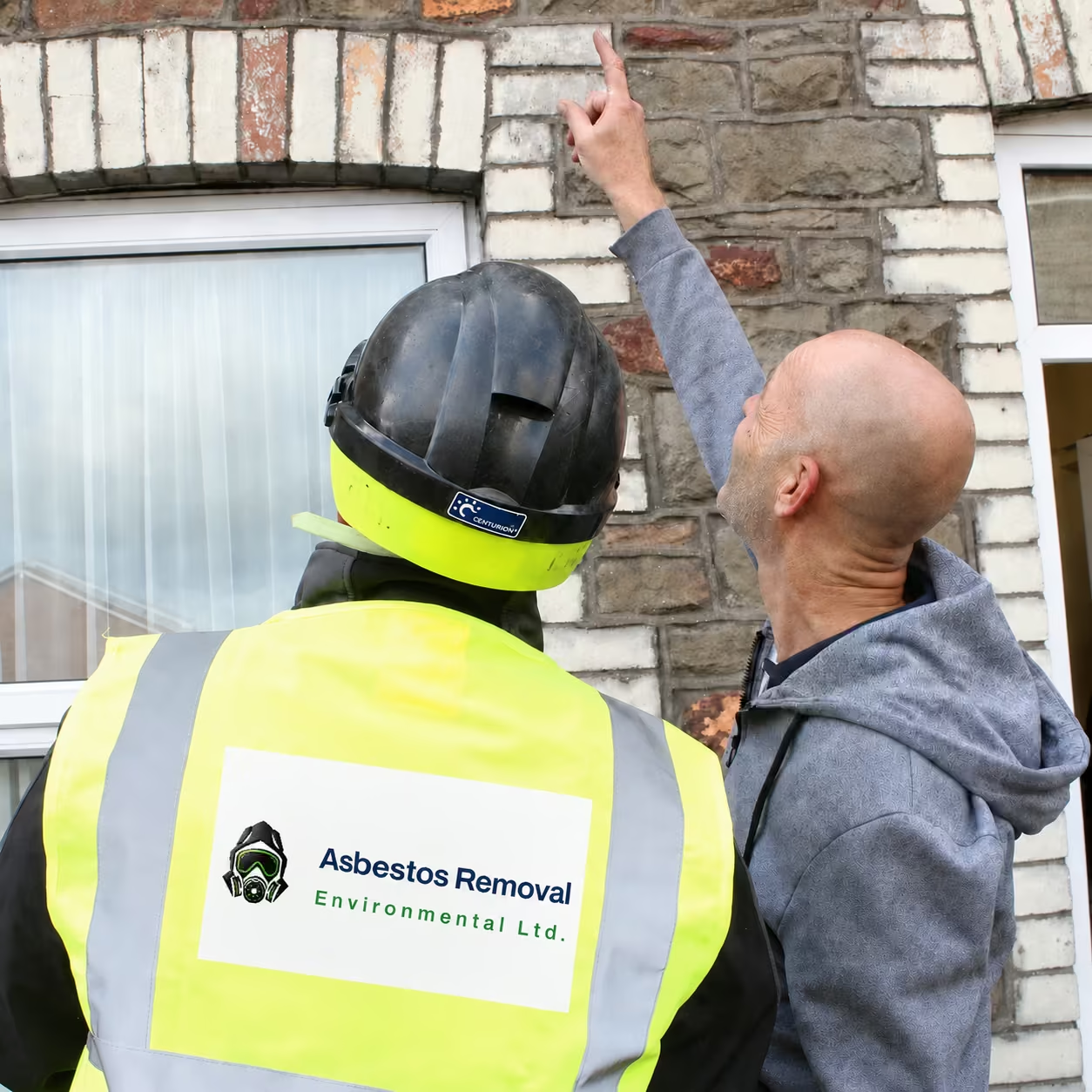
Homeowners & Landlords
Artex ceilings, garage roofs, floor tiles, water tanks. Discreet, tidy, family-safe working.
View Domestic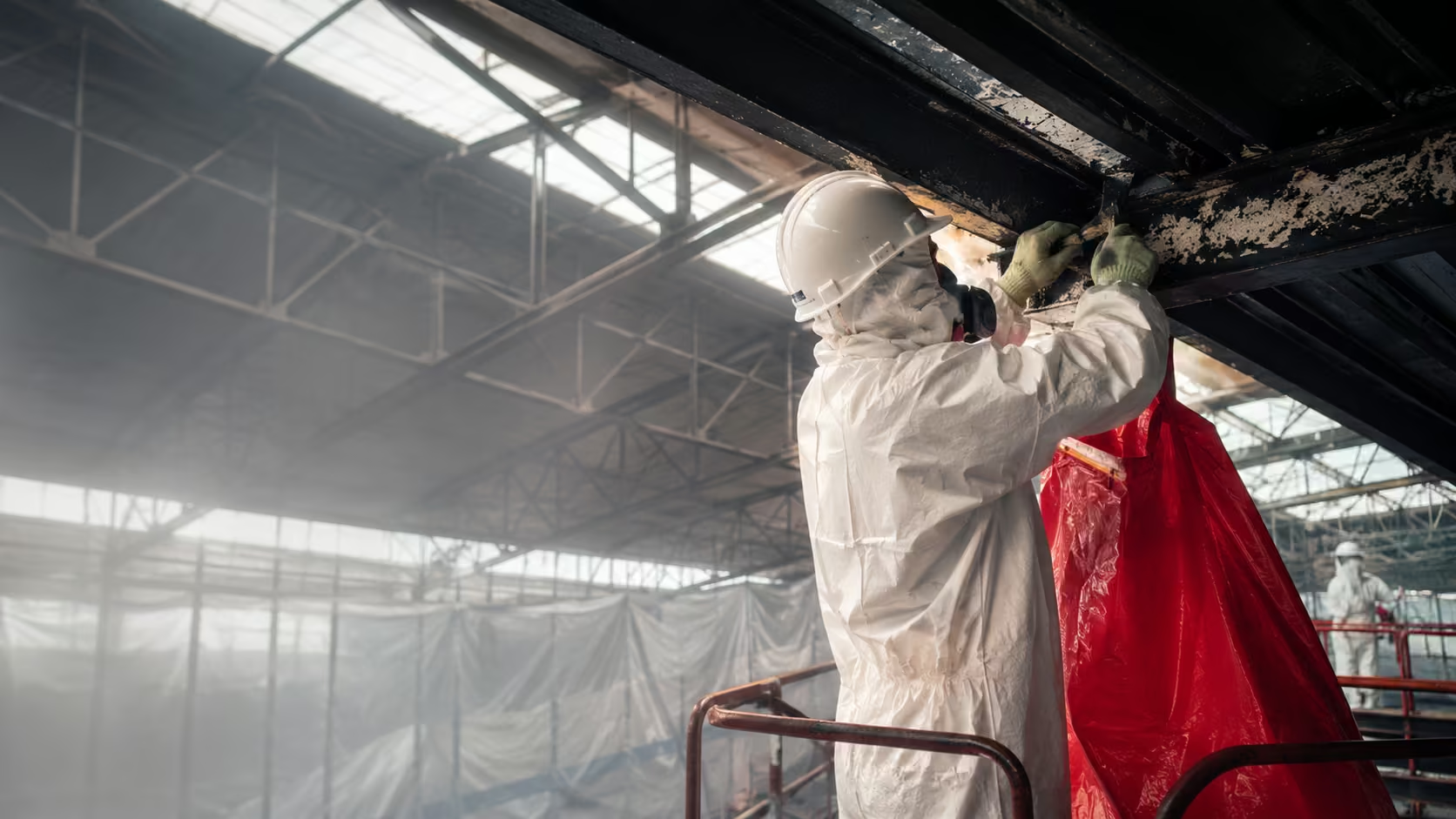
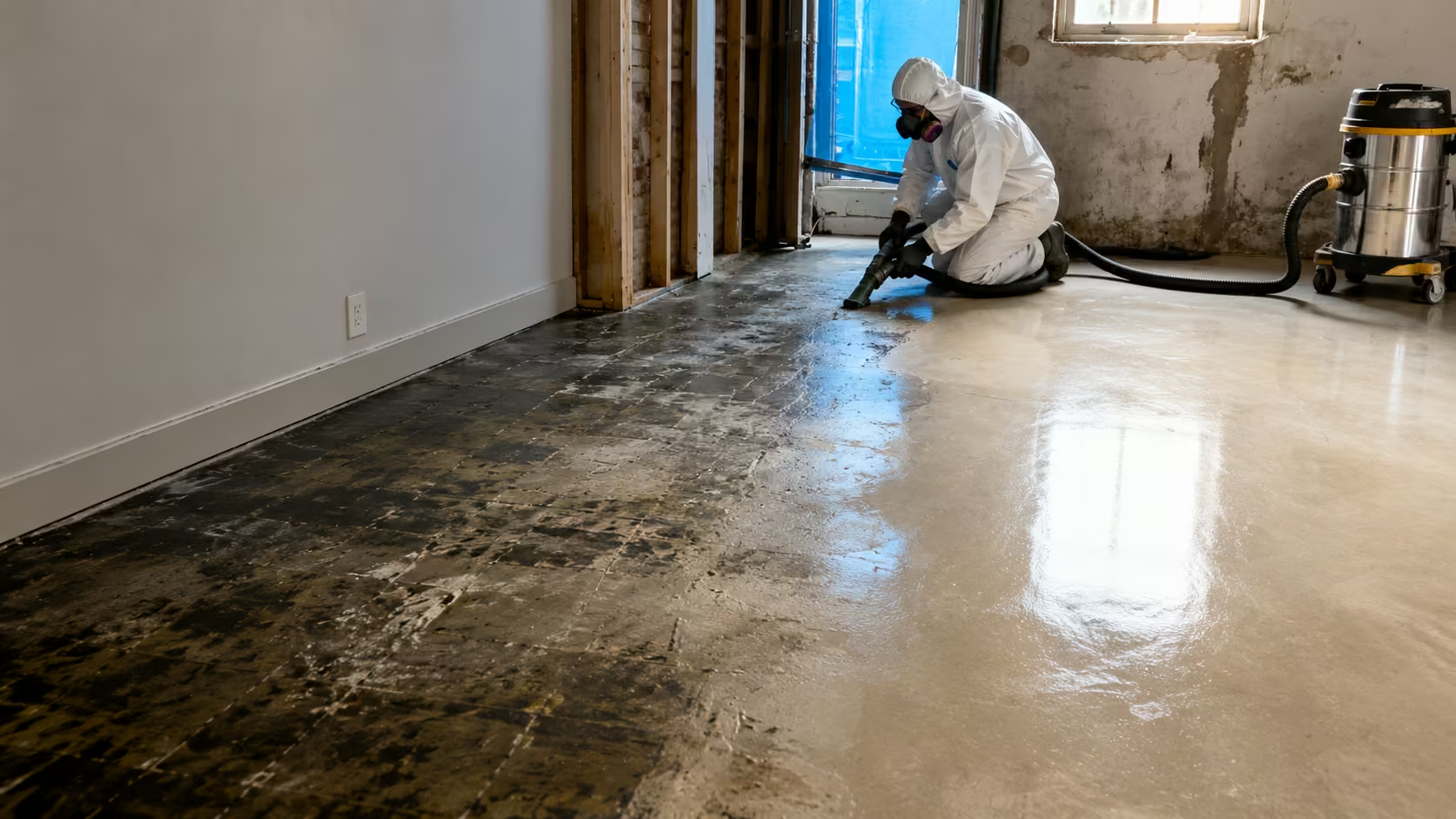
Commercial & Public Buildings
Offices, retail, schools and healthcare. Out-of-hours working to keep you trading.
View Commercial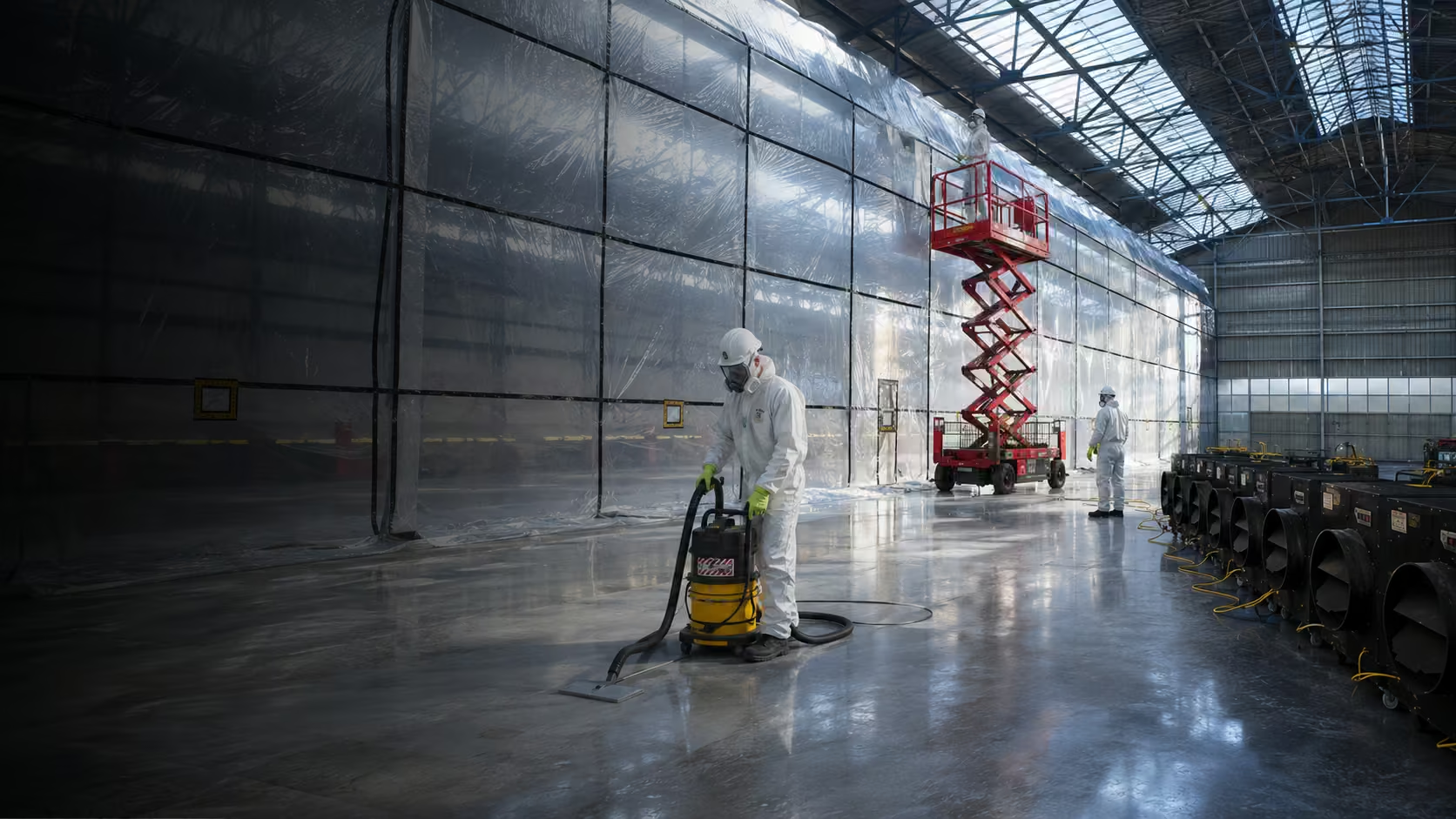
Industrial & Construction
Factories, warehouses and plant. Large-scale enclosures, negative pressure units and CDM coordination.
View IndustrialInteractive
Where Asbestos Hides in Glasgow Homes
Homes built or refurbished before 2000 may contain asbestos-containing materials. Explore common locations, but remember: appearance alone cannot confirm asbestos and suspected material should not be disturbed.
- Lower risk
- Moderate risk
- Higher risk
View as list
Textured (Artex) Ceiling (Moderate risk)
Living room & hallway ceilings · Common in homes decorated 1960s–1990s
Textured coatings applied before the mid-1980s often contain white asbestos. Safe if undisturbed and in good condition — the risk comes from sanding, drilling or scraping.
Commonly disturbed by: Sanding, Drilling, Removing coving, Fitting downlights.
Never sand or scrape a textured ceiling before it has been tested.
Learn moreGarage & Shed Roof (Moderate risk)
Detached garage / outbuilding · Built 1950s–1980s
Corrugated asbestos cement was the standard garage roofing material for decades. Weathering and moss growth degrade the surface over time; broken or drilled sheets release fibres.
Commonly disturbed by: Breakage, Drilling, Pressure-washing, Demolition.
Never pressure-wash or break up a cement roof — quote removal instead.
Learn moreVinyl Floor Tiles & Adhesive (Lower risk)
Kitchen, hallway, under carpets · Laid 1950s–1980s
Older thermoplastic tiles and the black bitumen adhesive beneath them frequently contain asbestos. Low risk while intact and covered.
Commonly disturbed by: Lifting, Grinding, Floor levelling.
If tiles crack or lift during renovation, stop and test before continuing.
Learn morePipe & Boiler Lagging (Higher risk)
Airing cupboard, cellar, behind boiler · Installed pre-1980s
Thermal lagging is among the most hazardous asbestos materials and is licensable — removal legally requires an HSE licensed contractor. Often hidden under later insulation.
Commonly disturbed by: Plumbing work, Boiler replacement, Any contact.
Do not touch suspect lagging under any circumstances — we'll test it and help you arrange licensed removal.
Learn moreAiring Cupboard / Ceiling Panels (AIB) (Higher risk)
Airing cupboards, ceiling hatches, partition walls · Built 1945–1985
Asbestos insulating board looks like ordinary board but releases fibres readily when cut or broken. Most AIB work is licensable and requires an HSE licensed contractor.
Commonly disturbed by: Drilling, Screwing, Removing panels, Loft hatch use.
Treat any unidentified board in a pre-1985 home as suspect until tested — we'll identify it and advise on the compliant route.
Learn moreSoffits, Fascias & Guttering (Lower risk)
Roofline exterior · Fitted 1950s–1980s
Asbestos cement roofline products are common and low risk while weather-sealed and intact. Usually addressed during window or roofline replacement.
Commonly disturbed by: Roofline replacement, Drilling for fixtures.
Tell your roofline installer the age of the property — test before replacement.
Learn moreCold Water Tank (Lower risk)
Loft · Installed pre-1980s
Older loft water tanks were commonly made from asbestos cement. Stable, but must be disposed of correctly when plumbing is upgraded.
Commonly disturbed by: Tank replacement, Loft conversion.
Never cut up an old tank to get it through the hatch — we remove and consign it whole.
Learn moreBoiler Flue & Rope Seals (Moderate risk)
Kitchen / utility, behind appliances · Installed pre-1990s
Asbestos cement flue pipes and rope door seals appear in older heating systems. Usually encountered during boiler replacement.
Commonly disturbed by: Heating engineers, Appliance removal.
Ask your gas engineer to stop work if a suspect flue is found — testing is fast.
Learn more
How It Works
From Enquiry to Clearance Certificate
Contact & Advice
Survey & Quote
Plan of Work
Controlled Removal
Inspection & Reassurance
Certified Disposal
In Our Customers' Words
Rated 5.0 by Glasgow homeowners and businesses
Real reviews from real jobs, every one published on our Google Business Profile.
Excellent company! When renovating our bathroom we came up against potential asbestos. We called this company and they were so quick to send someone out. They also worked hard to get us quick results knowing that we were mid-renovation! Ashley was so helpful calling us as soon as the results came in and reassuring us that if they were positive (which they weren’t thank goodness) they would be able to help us. Their pricing was brilliant compared with other companies. With this and they very fast turn around you would be mad to go anywhere else! Thank you so much to the team for looking after us.
Very professional company turned up when they said and were upfront about an issue with our initial sample at the lab, (issues out of their control) but dealt with quickly. Hopefully we dont need more asbestos testing, but we’d absolutely use them again and would pass on their details without hesitation to anyone who needed their expertise.
I couldn’t recommend this company enough. They came out to our home as an emergency, and from the very first phone call, Ashley and the staff were incredibly friendly, helpful, and reassuring. The workers who came to the house were welcoming, professional, and respectful throughout. They made what was a stressful situation feel much easier to deal with and carried out everything with great care and professionalism. Excellent service from start to finish. Thank you to the whole team!
Had work done by us? Review us on Google or on Trustpilot:
Common Questions
Asbestos removal in Glasgow — your questions answered
How much does asbestos removal cost in Glasgow?
It depends on material type, condition, location and quantity — a garage roof differs greatly from pipe lagging in a boiler room. Every job is quoted individually after an assessment, and quotes are free and fixed.
Is it illegal to remove asbestos myself?
Homeowners may legally handle some lower-risk materials, but it is strongly discouraged and, for licensable materials (sprayed coatings, lagging, most insulation board), removal must by law be carried out by an HSE licensed contractor. Disposal is also strictly regulated. We'll tell you honestly which category your material falls into.
How do I know if my property contains asbestos?
Any building constructed or refurbished before 2000 may contain asbestos. The only reliable confirmation is sampling and laboratory analysis as part of an asbestos survey.
Which areas of Glasgow and Scotland do you cover?
The whole of the City of Glasgow at a single rate — West End, Southside, East End, the north of the city and the post-war schemes alike, from Hillhead and Partick to Shawlands, Dennistoun, Knightswood, Cardonald, Castlemilk and Drumchapel. Beyond the city boundary we cover Paisley, Hamilton, Motherwell, East Kilbride, Clydebank and Cumbernauld, as well as Livingston, Edinburgh and further afield, with Scotland-wide coverage for commercial and industrial projects. Nobody pays a premium for a postcode.
Are you licensed by the HSE?
We carry out non-licensed and notifiable non-licensed asbestos work — the categories that cover the majority of asbestos in Scottish homes and businesses, including cement roofs, Artex, floor tiles and more. Licensable materials legally require an HSE licensed contractor; if a survey identifies these, we say so straight away and help you arrange compliant removal.